

Participation in OECD (list year):
N/A.
This guide offers information on the current regulations related anticorruption policies in various jurisdictions around the world. Please contact the listed contributors for specific questions.
How to Use: You can use the tools below to create bespoke reports for the jurisdiction(s) and topic(s) covered. Click into single jurisdiction for one location or use the compare tool to compare multiple jurisdictions. Select the jurisdictions and topics of interest to create your unique report. You also have the option to print or download using the ellipsis button in the top right corner.
N/A.
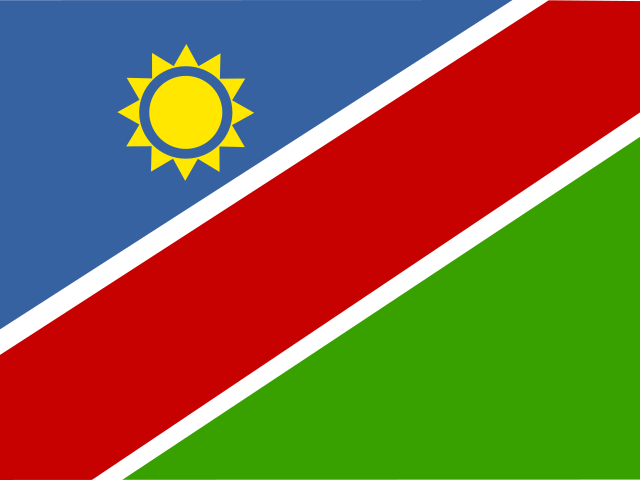
Namibia has several anti-corruption laws that aim to prevent, detect, and punish corrupt practices in the public and private sectors. Some of the relevant laws include: Anti-Corruption Act, 2003 (Act No. 8 of 2003)
This Act established the Anti-Corruption Commission (ACC), an independent body responsible for investigating and prosecuting corruption cases. The Act criminalizes corrupt practices such as bribery, embezzlement, abuse of office, and money laundering. The ACC also has the power to seize assets obtained through corrupt practices and to recover stolen public funds.
Public Procurement Act, 2015 (Act No. 15 of 2015)
This Act regulates the procurement of goods, works, and services by public entities. It aims to promote transparency, fairness, and competition in public procurement and prevent corrupt practices such as bid rigging and favoritism. The Act establishes the Central Procurement Board of Namibia (CPBN), which is responsible for overseeing public procurement and ensuring compliance with procurement rules and regulations.
Prevention of Organized Crime Act, 2004 (Act No. 29 of 2004)
This Act criminalizes organized crime, including corruption, money laundering, and illicit trafficking of drugs, weapons, and human beings. It provides for the forfeiture of assets obtained through organized crime and allows for the investigation and prosecution of organized crime syndicates.
Whistleblower Protection Act, 2017 (Act No. 10 of 2017)
This Act provides protection to whistleblowers who report corruption or other wrongdoing in the public or private sector. It prohibits retaliation against whistleblowers and provides for the confidentiality of their identity. The Act also establishes a Whistleblower Protection Advisory Committee, which is responsible for monitoring the implementation of the Act and advising the government on whistleblower protection issues.
Overall, these laws demonstrate Namibia's commitment to combating corruption and promoting transparency and accountability in public and private sectors. However, effective implementation and enforcement of these laws are crucial to their success.
The Anti-Corruption Act, Public Procurement Act, Prevention of Organized Crime Act, and Whistleblower Protection Act all prohibit different forms of corrupt and illegal practices in Namibia. A few examples of what each Act prohibits include: Anti-Corruption Act
This Act prohibits a range of corrupt practices in the public and private sectors, including:
The Act also establishes the Anti-Corruption Commission, which has the power to investigate and prosecute corruption cases.
Public Procurement Act
This Act regulates the procurement of goods, works, and services by public entities and prohibits practices such as:
The Act establishes the Central Procurement Board of Namibia, which is responsible for overseeing public procurement and ensuring compliance with procurement rules and regulations.
Prevention of Organized Crime Act
This Act prohibits a range of organized criminal activities, including:
The Act provides for the forfeiture of assets obtained through organized crime and allows for the investigation and prosecution of organized crime syndicates.
Whistleblower Protection Act
This Act protects whistleblowers who report corruption or other wrongdoing in the public or private sector and prohibits retaliation against them. It also establishes procedures for reporting and investigating whistleblower complaints and provides for the confidentiality of whistleblowers' identities.
Yes.
Yes.
No. Facilitation payments are not allowed under Namibian law as they are considered a form of bribery in Namibia and are prohibited by the Anti-Corruption Act of 2003.
Section 43 of the Anti-Corruption Act prohibits giving, offering, or promising any gratification, whether directly or indirectly, to a public officer, in exchange for the officer doing or refraining from doing anything in their official capacity. This includes facilitation payments, which are considered a form of bribery or corrupt conduct.
Therefore, any person who gives or offers a facilitation payment to a public official in Namibia may be prosecuted under the Anti-Corruption Act and face severe legal consequences, including fines, imprisonment, and forfeiture of assets obtained through corrupt means.
Yes. Under certain circumstances, a corporation can be held liable for the acts of overseas agents, intermediaries, joint venture partners, and third parties in Namibia.
The Anti-Corruption Act of 2003 provides for the liability of legal persons, including corporations, for acts of corruption committed by their employees, agents, intermediaries, or any other persons associated with them in the course of their business.
Section 35 of the Act states that a legal person may be held criminally liable if any of the following conditions are met:
Therefore, if a corporation's overseas agents, intermediaries, joint venture partners, or third parties commit acts of corruption in Namibia in connection with the corporation's business, the corporation could be held liable for their actions under the Anti-Corruption Act if the above conditions are met.
It is important for corporations to have effective compliance programs in place that include measures to prevent corruption and ensure that their agents and partners comply with applicable anti-corruption laws. Failure to do so could result in significant legal and reputational consequences for the corporation.
Yes.
Yes.
The sanctions for breach of anti-corruption legislation in Namibia vary depending on the specific offense committed and the severity of the violation. Examples of the sanctions that may be imposed on directors and corporations include: Anti-Corruption Act
Under this Act, any person convicted of corruption or related offenses may face imprisonment for up to 25 years and/or a fine of up to N$500,000. In addition, the court may order the forfeiture of any assets obtained through corrupt means.
If a corporation is found guilty of a corruption offense under the Anti-Corruption Act, it may be fined up to N$10 million or 20% of its turnover, whichever is greater. The court may also order the corporation to take remedial measures to prevent future offenses, such as implementing an anti-corruption compliance program.
Public Procurement Act
Violations of this Act may result in the cancellation of the procurement process, disqualification from future procurement opportunities, or a fine of up to 10% of the contract price.
Prevention of Organized Crime Act
Penalties for offenses under this Act vary depending on the specific offense committed. For example, money laundering may result in imprisonment for up to 30 years and/or a fine of up to N$1 million, while the maximum penalty for drug trafficking is life imprisonment.
Whistleblower Protection Act
Employers who retaliate against whistleblowers may be fined up to N$100,000 and/or face imprisonment for up to 12 months.
In addition to these sanctions, directors and corporations may also face reputational damage and loss of business opportunities as a result of a breach of anti-corruption legislation in Namibia. Therefore, it is important for them to have effective compliance programs in place to prevent and detect corrupt activities and ensure compliance with applicable laws and regulations.
Disclaimer: This guide contains summaries of general principles of law. It is not a substitute for specific legal advice and should not be relied upon in relation to the application of the law or subject matter covered.